Friday, May 13, 2016

The Bad Habit That Drives Swim Coaches Crazy

by Olivier Poirier-Leroy. Join his weekly motivational newsletter for swimmers by clicking here.

There’s a bad habit that drives your coach crazy.

Something that you don’t think is a big deal. Something that seems innocuous and harmless. Something you do that is louder than words.

In fact, it drowns out anything you might say.

It can be the thing that keeps you from improving, can have real physical effects on your body, give the opposition a jolt of confidence, and even perpetuate the beliefs you have about yourself.

Your coach ribs you for it. Your parents give ya heck for it. And even your teachers make sure to point it out.

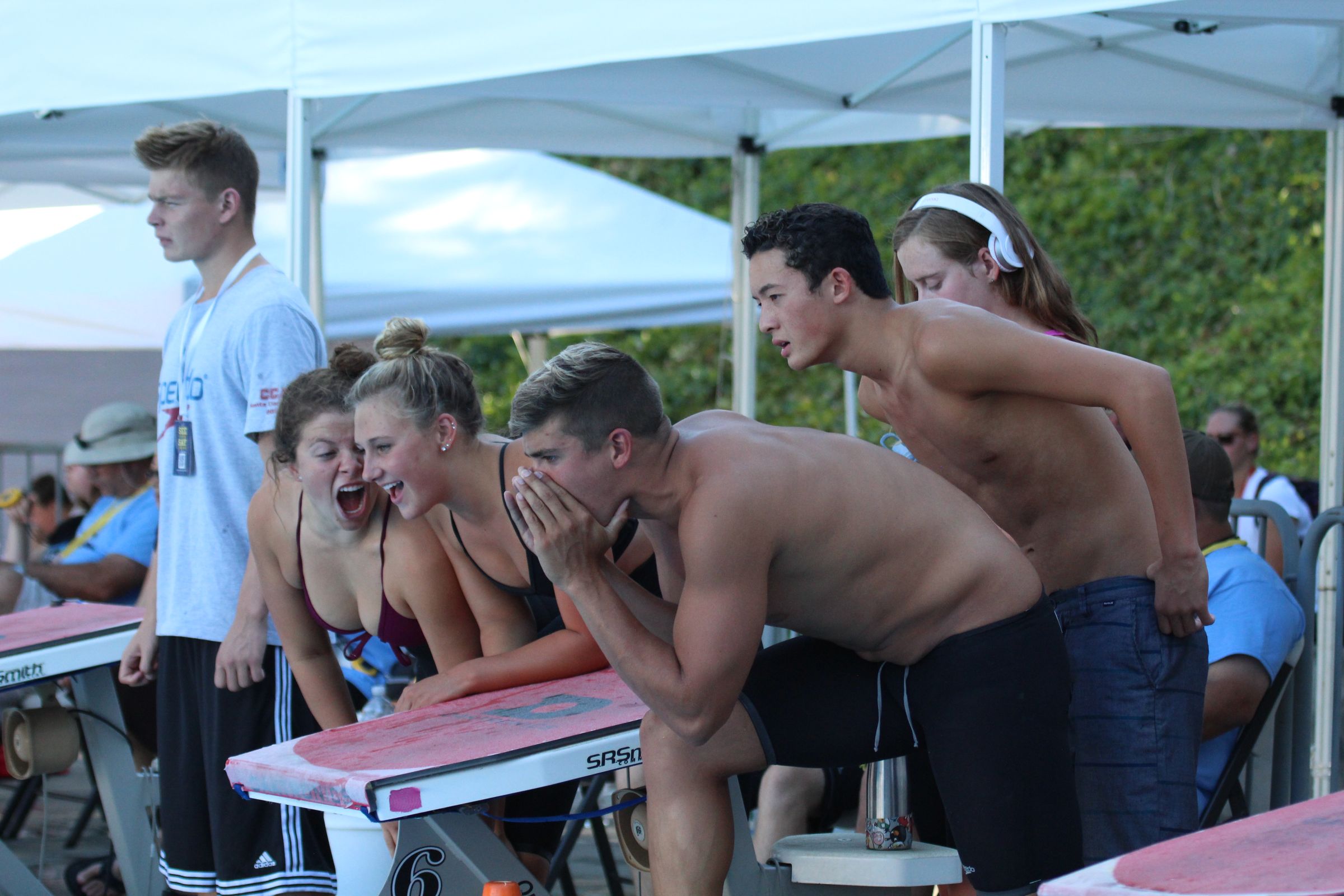
It’s bad body language.

You know what I am talking about…

The crossed arms. The sighing. The grumbling under your breath. The rolled over shoulders. Eyes to the ground. The grouchiness.

But you might not realize how much of an effect this kind of body language has not only on you but on the team around you.

What poor body language ends up saying about us:

  • We aren’t on the same page as the rest of the group.
  • We don’t believe in the workout, don’t feel like doing it, can’t be bothered, or all of the above.
  • We don’t mind dragging the rest of the group down.
  • It tells the competition every thing they need to know about whether or not we are going to swim fast.

DOES BAD BODY LANGUAGE REALLY MATTER?

As it turns out, the way we present ourselves in terms of posture not only does a great job of showcasing our displeasure about something, but it actually makes things worse.

In a study done by researchers at Columbia and Harvard sought out to see if the way that we carry ourselves had a measurable physiological impact.

One group was instructed to hold a “power pose.” Think Superman. Hands on hips, shoulders back, chest forward. Not only did this group feel more confidant, but experienced elevations in testosterone (by 20%), decreased cortisone, and increased tolerance for risk.

The other group was asked to hold a series of “low power” poses. Head down, arms crossed, shoulders rounded forward. You know, the grouchy and grumpy look you see from a young swimmer being asked something they don’t want to do. As you can guess, this group experienced the opposite reaction as the superhero group, with decreased levels of testosterone, increased cortisone (the stress hormone), and a decreased tolerance for risk.

On top of all that, our bad body language motivates the competition.

In another study a group of competitive tennis table players were asked to watch videos of their competition. In each video they displayed various types of body language, and the players were asked to rank their confidence in whether or not they would be able to defeat the opponents.

Unsurprisingly, confidence was low when viewing the players who exhibited positive body language. On the other hand, they felt pretty good about their chances at beating the players who showed negative body language.

It’s easy to dismiss gamesmanship or “psych-outs” as something reserved for other swimmers, but the effects of your body language are real and will have an effect on the competition, whether it’s at the big meet or simply the swimmer in the next lane at practice.

THE TAKEAWAY

Does this mean you need to roll around the pool deck with excessive amounts of swagger? That you should force yourself to appear 100% positive and upbeat at all times?

Not particularly. Especially if that’s just not the way you display confidence.

But it should be a check for you to roll back those shoulders, pick your eyes up, and take a big, deep, “Hey, I got this” breath.


ABOUT YOURSWIMBOOK

YourSwimBook is a log book and goal setting guide designed specifically for competitive swimmers. It includes a ten month log book, comprehensive goal setting section, monthly evaluations to be filled out with your coach, and more.

Learn 8 more reasons why this tool kicks butt.

Join the YourSwimBook weekly newsletter group and get motivational tips and more straight to your inbox. Sign up here.

Tuesday, May 3, 2016

4 Messages for Today’s Teenage Swimmer

By Annie Grevers, Swimming World Staff Writer (reposted from swimmingworldmagazine.com)

Photo Courtesy: Sue Borst

The teenage years are not necessarily one’s most selfless stage in life. Your own swimming career grows ever more important and your swims can begin to dictate how you treat other people. It’s not that teenage swimmers are incapable of being selfless, contributive, caring for those around them; it’s just that many times, they have no idea how much of a ripple effect their actions and reactions have on those around them.

In the American Swimming Coaches Association’s most recent newsletter, a presentation from the 2015 World ASCA Clinic entitled “Cultural Headwind” was documented. Don Heidary of Orinda Aquatics gave the talk emphasizing the importance of character in shaping the culture of his club team. Heidary took a comprehensive look at what technology and public figures are doing to our youth.

I jumped on the Heidary wagon as soon as I read this– “Kim Kardashian. Worst offense: promoting appearance over achievement….She teaches kids that it is not what you do that makes you important, it is how you look and how you leverage those looks.” Social media was another of Heidary’s talking points. He quoted a “Steve Jobs: The Man in the Machine” film critic– “We stand in a crowd, staring into a glossy screen, scrolling into oblivion, lost to ourselves. Alone.”

I’m guilty of getting sucked into my phone. It’s not just a teenager thing. Many of you have seen the second most watched TED Talk in history on power poses (if you haven’t, watch it!). Amy Cuddy, who gave the talk, was recently interviewed on NPR. Cuddy said she can watch her son transform as he gazes at his phone for prolonged periods of time. He slinks down into his chair, hunches over, and shuts down after seeing something that makes him feel like less of a person.

We see other people’s highlight reels on social media, which sometimes evoke feelings of envy and shame. It’s a platform that magnifies the importance of people based on aesthetics. How many people have become Instagram famous? I don’t want my team’s swimmers to idolize anyone’s Instagram account or the Kardashian lifestyle. The return on that is discontentment, upside down priorities, and a completely self-centered world view. A swim team should have the exact opposite effect.

“For three hours a day, teenagers are fully engaged, with no use of cell phones, no social networking/selfies/posts/tweets,” Heidary said. “They are not worried about their appearance, their makeup, clothes. They are not drinking. It is the healthiest environment possible for kids [Yep, he’s talking about swim practice]. The life classroom. The mental and physical nature of sports magnifies the most critical things in life: work ethic, sacrifice, humility, resilience.”

What kids do in these hours truly will shape who they become. Here are a few things I’d like today’s teenage swimmers to think about:

1. Your Instagram fame will never be enough.

yoga-beach

But the support of your teammates and your support of them will pay dividends! I have seen Instagram photoshoots in “super cute” practice suits go on for way too long after a taxing swim practice. The double taps on photos may be thrilling momentarily, but it’s never going to elevate your confidence for as long as you’d like. Invest in encouraging and building up your teammates with more than a “like.” Show that you appreciate their effort in practice, their positive outlook, their new stroke technique. Show you care…in reality.

2. Stop vocalizing every ache and pain.

Photo Courtesy: Chucka NC

Photo Courtesy: Chucka NC

Each time you groan, give the stink eye, or try to negotiate a set, you’re permitting other people to flush mental energy down the drain. Think before you word vomit every thought you have about the main set. Maybe it’s not your favorite type of set, but survey your thoughts before you vocalize them. You know those people who are sometimes obnoxiously positive, but they tend to make your work harder? Be obnoxiously positive in your own head. It will help you. It will help your teammates. It can revolutionize your team culture.

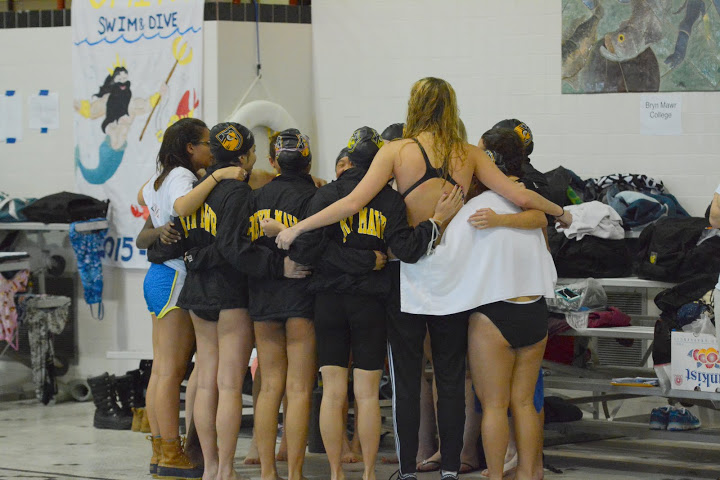
3. Embrace the group challenge.

bryn-mawr-seven-sisters-team-cheer-huddle

Photo Courtesy: Kenneth Chung

One of my favorite things about swimming was when something impossible was thrown at the group, and rather than seeing sulking expressions, there were faces of anticipation and excitement. The workload was seen as an opportunity. Something thrown at the team, not to break us, but to build us. A hard set can be an indication of trust. If your coach made the set for you, he or she trusts that you can handle it.

4. Find the true heroes.

Photo Courtesy:

Yes, we are fortunate enough to be in a sport with an incredible stock of fast swimmers to look up to! Then there are millions of heroes walking among us doing things to better the lives of others who go unappreciated. If you’ve never watched the CNN Heroes tribute, you should. Heroes are everywhere, and they typically aren’t the people drawing the attention of tabloids.

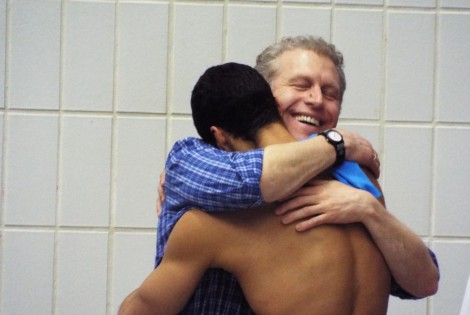
I stood beside legendary University of Texas men’s head coach Eddie Reese last weekend. He’s one of my heroes. I watched as his Longhorn men came up to him after their races, waiting for a few words from the sage to latch onto or even saturating Eddie with a wet hug. They adore their coach. Because he leads them to win more NCAA titles than any other college team in history? Nah. Because he cares about them and would never dare credit himself with the success they have had or will have. The heroes in this sport, in this world, are those who pour all of their love and energy into others.

Heidary challenges his team to ask two questions, “How can you help?” and “Who can you help?” Having those questions as the cornerstone of your team culture will make for an intoxicatingly positive, encouraging, safe team environment. Who doesn’t want that?


AUTHOR: ANNIE GREVERS
avatar

Annie (Chandler) Grevers is a staff writer for Swimming World. She swam for the University of Arizona, winning the 100 yard breaststroke at the NCAA DI Championships as a senior in 2010. She was also a member of six NCAA Championship relays during her college career as well as a member of Arizona’s NCAA Championship title in 2008. She represented the United States at the Pan Pacific Games in 2010 and at the Pan American Games in 2011, where she won the 100 breaststroke. She is married to Matt Grevers and resides in Tucson, Arizona.

Wednesday, April 13, 2016

Why Failure Is Important

Photo Courtesy: Peter H. Bick

By Andy Ross, Swimming World College Intern (reposted from www.swimmingworldmagazine.com)

If you clicked on this article, you probably did so because you thought the title was absurd. ‘Why would failure be important? Failure is never something you want to prepare yourself for!’

Well, concerned reader, I want to tell you why failure is important.

Goals are a very important part of swimming. Without goals, we have nothing to shoot for, and there is no purpose. The best part about any given championship meet is seeing the look on a swimmer’s face when they achieve the goal they had set out for since the season began. The display of pure joy on the faces of swimmers is what coaches, parents and teammates strive to see. But, with every ecstatic swimmer, there is at least one, maybe two disappointed swimmers.

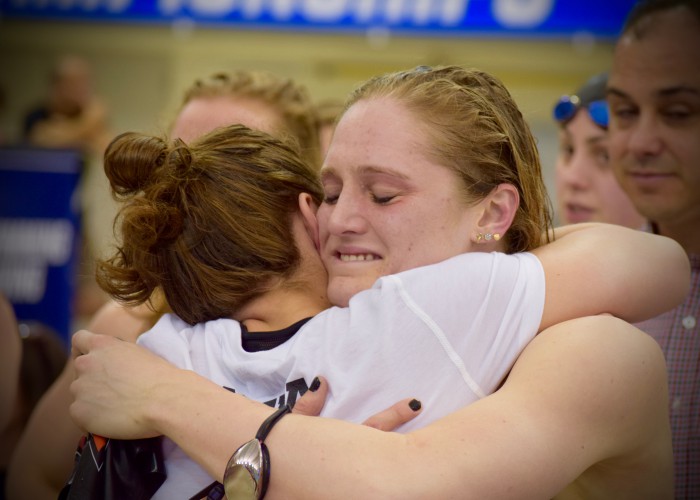
A lot of tears are shed on the pool deck at championship meets. Swimmers may miss their time goal, they may get 17th or they might have lost a team title that they spent the whole season dreaming of.

worrell-cry-emotional-hug-ncaas-2016

Photo Courtesy: Annie Grevers

When I was a junior in high school, my ultimate goals were to win an individual title at high school sectionals, get the school record in the 200 medley relay and to win the team sectional title for the first time in 11 years. I became so obsessed with those goals, that I spent almost every minute of every day thinking about what I was going to do when I got them. I would dream about the celebrations, the fist pumps and the time over and over in my head. I even had a countdown in my daily calendar that started about 100 days out.

When I got to that fateful February day, I was nervous. I was so nervous, I was freaking out. I was shaking. I had spent the entire season thinking about this one day and nothing else. I was ready to achieve my goals but I was nervous that they weren’t going to happen. And I didn’t know what I was going to do if I came up empty.

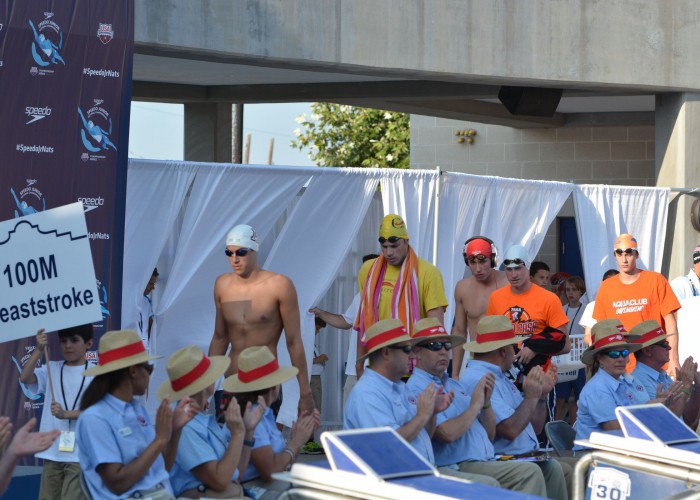
100-breaststroke-walkout-2015-usa-swimming-juniors-005

Photo Courtesy: Donna Nelson

The first event was the 200 medley relay. I swam the breaststroke leg and had the fastest split of my life. Yes, we won the relay, but we missed the school record by three tenths of a second. Oh well! I was glad we won, but I knew we had another chance to break it at state that next week.

The team battle was back and forth the whole meet. We were up, we were down. I knew I was going to have to be ready because I was in the last two events– the 100 breast and the 400 free relay. I was the only one from our team in the A-final of the 100 breast, while our rival school had two.

This was the race I dreamed about winning all year. I dove in and saw the guy next to me bolt out in front. I wouldn’t say I was shocked, because I knew he would be out fast. But I was shocked I couldn’t catch him. I remember the last 25 almost giving up. I swam my best time, but I didn’t win. In fact I was third! I couldn’t believe it. And to top it all off, we were down six points going into the last relay.

Our rival school had stacked the 400 free relay while my team stacked the 200s. I was anchoring the 400 and knew we needed about a two to three second lead if we were going to win. I dove in a second behind. I was devastated. Although I tried as hard as I could over those 100 yards, I was almost in disbelief it was happening.

‘This was supposed to be the year! This was the year where I would get that record, get my first individual title and help the team win a championship,’ I was thinking to myself. But it wasn’t. I sat and cried for a long time after that race was over.

Photo Courtesy: Hayley Good

Photo Courtesy: Hayley Good

But then I remembered I was going to have one more crack at that 200 medley relay record. It was my only swim of the meet and it was also my 17th birthday. We were in the very first heat of the very first event. We were going to get the record and just screw around the rest of the weekend. It was going to be the best weekend of my life.

Our backstroker got us out first. I dove in ahead, but I couldn’t get my arm speed up. I went into the turn with the longest glide I have ever done in my life. All my momentum was lost. I tried to spin but I knew it wasn’t working. I went six tenths slower than my split at sectionals. My teammates all swam faster, but we missed the record…again. This time it was by 11 hundredths.

I couldn’t believe it. I stormed off, knowing it was my fault we didn’t get the record.

After that meet, it took me a long time to fall in love with swimming again. I was so upset because I didn’t achieve my goals after I spent so much time thinking about how I would celebrate them. After that devastating season, I changed my approach to swimming. I stopped thinking about time, didn’t count down the days and stopped worrying about what other swimmers were doing around me. I worried too much about what our rival school was doing and what my competitors were doing in-season that I didn’t focus on myself, and what I needed to do. And if we were going to win a team title that year, I needed to get my job done, instead of worrying about what everyone else was doing.

Long story short, I had the best season to date during my senior year. I won my first individual title and went to state in two events. Yeah, we didn’t get the school record in the medley relay (we missed it by a second) and we didn’t win the team title. But I used the failure in the relay to fuel me for the individual races. And I realized that winning a team title doesn’t define a successful season. We were just as happy to finish second as we were if we would have won.

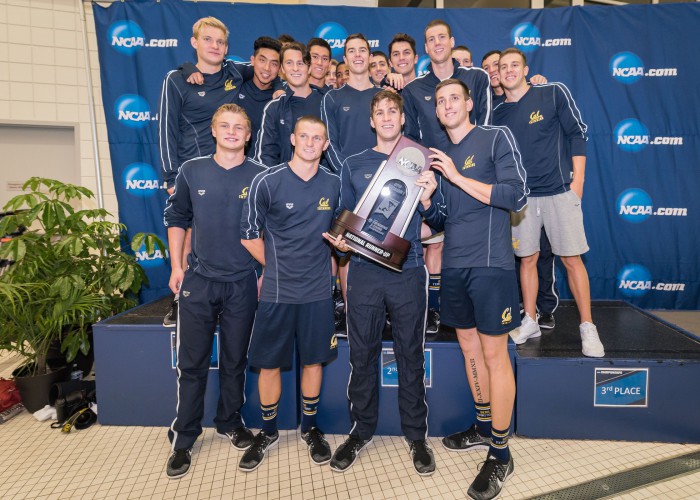
2016.03.26 NCAA Mens Swimming Championships_Reagan_California Team 1

Photo Courtesy: Reagan Lunn/Georgia Tech Athletics

A couple of years back, I remember watching Tom Shields do an interview after his senior season at Cal at NCAAs. Cal finished second to Michigan after Cal won the previous two. When asked why Cal stayed and applauded Michigan as they celebrated he said, “We win with class and we get second with class. We’re not mad that they won…Michigan gave us their best and these three days, they were better than we were. We have to applaud that, we came to race against the best. They were on fire, so why be mad?”

I’ve really taken this quote to heart, because I’ve always watched strong teams finish second at NCAAs and be happy. When I was younger, I was always wondering why they were happy. They probably had a team goal to win, and they didn’t achieve it. So why were they not all pissed off? Well, just because you miss a goal, doesn’t mean that season was a failure.

I had pretty much spent my entire junior season focused on that one day. I didn’t enjoy the process and didn’t spend any time thinking what would happen if I didn’t achieve any of my three goals. I was heartbroken when I didn’t achieve any of them.

Tom Shields wins the 200 butterfly.

Photo Courtesy: Peter H. Bick

So what I am saying is this: enjoy the process, don’t stress over your goals. Write down a goal time, and don’t put much thought into it after that (except when necessary, of course). Thinking too much can consume you and make you more stressed than you need to be. Don’t worry about your competitors because you can’t control what they are doing.

Another quote that Shields had in that interview was “experience is what you get when you don’t get what you want.” Don’t treat a ‘failure’ like it is the end of the world. Everything happens for a reason so don’t beat yourself up when something doesn’t go your way.

Shields Interview


AUTHOR: ANDY ROSS

avatar

Andy Ross is a junior at Southern Illinois University studying Radio and Television with a minor in Journalism.