by Olivier Poirier-Leroy
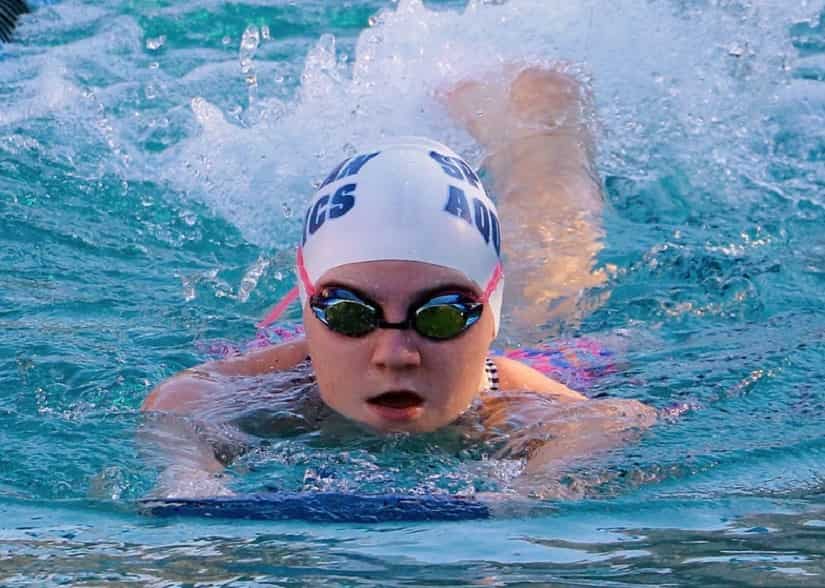
Fast swimming starts with your mindset. Here are 10 ways elite swimmers think differently.
If you ask any Olympic coach what the defining characteristic of elite swimmers is you will be told, “it’s their mindset.”
Fast swimmers possess a state of mind that is above-and-beyond that of the swimmers who talk about success and yet never chase it with any kind of conviction. (Hereafter referred to as the “slow” swimmer.)
The way they battle through setbacks. How they approach challenges. How willing they are to go the extra mile. Their ability to set goals, make a plan, and stick to it. These are the things that merge to form the mindset of an elite athlete.
Here are 10 ways that the mindset of fast swimmers is different to that of the slow swimmer:
1. Fast swimmers look to improve at practice, while slow swimmers go to get it over with.
Does this mean that fast swimmers don’t rue early mornings? That they love it when coach writes up 10x400m IM best average on the whiteboard?
No.
But they use those early mornings and those tough sets as opportunities to get better, to become better swimmers. For others, it’s punishment, a chore, simply something to be endured.
2. Fast swimmers know they have to risk it to win it, slow swimmers stay in their comfort zone.
There is no guarantee of success. Ever.
Even for Michael Phelps, arguably the most gifted swimmer of our lifetime, he still had to work hard to get to where he was, and even then, there were times where he still wasn’t the fastest swimmer in the pool.
Knowing this isn’t a deterrent for the fast swimmer. But it is for the other guy/gal.
3. Fast swimmers will do extra, slow swimmers will do simply what is required.
For those who aren’t as talented, or aren’t as physically gifted as the top swimmers in pool your talent must become hard work and tenacity. And this means doing extra.
Going beyond what is asked. They understand that exceptional results only happen with exceptional effort.
For your neighborhood slow swimmer, they will do the bare minimum and still expect out-sized results.
4. Fast swimmers have goals, slow swimmers have wishes.
They have the big, shiny goals. Just like everybody else. But more importantly, they have benchmarks and mini-goals that they set for themselves along the way in order to keep themselves focused over the course of a long season of training.
Other swimmers make wishes, and think to themselves how nice it would be to accomplish them, if only they had the time or energy to do so.
5. Fast swimmers are accountable to themselves, slow swimmers make excuses.
The top swimmers in the sport know that at the end of the day they only have themselves to blame if they come up short. And because they are willing to accept responsibility for their swimming, both the good and the bad, they own their performances.
Slow swimmers look everywhere else but the mirror when things don’t go well. It’s the competition’s fault. It’s coaches fault. It’s the pool’s fault.
6. Fast swimmers work through setbacks, slow swimmers give up the moment things aren’t going their way.
The swim season is long. You don’t need me to tell you that. The grind is vicious, and it is unforgiving. Through it you will experience setbacks and failures. Some large, some small, some under your control, some not.
Fast swimmers accept this as part of the process, simply things to be overcome. Slow swimmers view them as proof that they aren’t going to succeed, that difficult means impossible.
7. Fast swimmers act in the moment, slow swimmers wait for things to be perfect.
Given how limited our window of opportunity is to achieve great things in the water it is a wonder that there isn’t more urgency in the way we act.
Fast swimmers don’t wait until they feel like it, or when the mood strikes them—they act with controlled urgency.
Slow swimmers, on the other hand, sit around waiting for that ideal moment that never seems to come.
8. Fast swimmers prioritize their training and preparation, slow swimmers hope it comes together for them at the big meet.
Yes, for most training is hard. Really hard.
But it’s where those best times, records and gold medals are carefully sculpted and developed. Fast swimmers understand the importance of their training, and rank it accordingly within the priorities of their life.
The slow swimmer, on the other hand, cruises through training, swimming inconsistently, doing half the work, and then expecting to be able to perform at a high level when it comes to race time.
9. Fast swimmers focus on steadily improving, slow swimmers expect big time drops in time to happen overnight.
There is a special type of patience and faith that fast swimmers have with the process of becoming great.
They know that the result they want is built slowly. They understand it takes time, it takes patience, and to believe and know that their efforts will pay off down the line.
The slow swimmer expects to see a violent and rash improvement after a couple solid efforts, and is irreparably disheartened when it doesn’t happen.
10. Fast swimmers contribute to a culture of winning, slow swimmers expect the culture to only work for them.
Being successful in the water is a lot of fun. Seeing your hard work pay off is rewarding. And when you have a group of swimmers who are all interested in seeing the group succeed, support each other in practice and keep each other accountable to the goals of the team, you are going to end up with a lot of fast swimming.
The slow swimmer, on the other hand, solely expects the team to support him or her. They show up to practice, complain about the sets, grumble about the workout, and create a type of cancer within the team that diminishes the team’s chances for success.
Reposted from www.yourswimlog.com
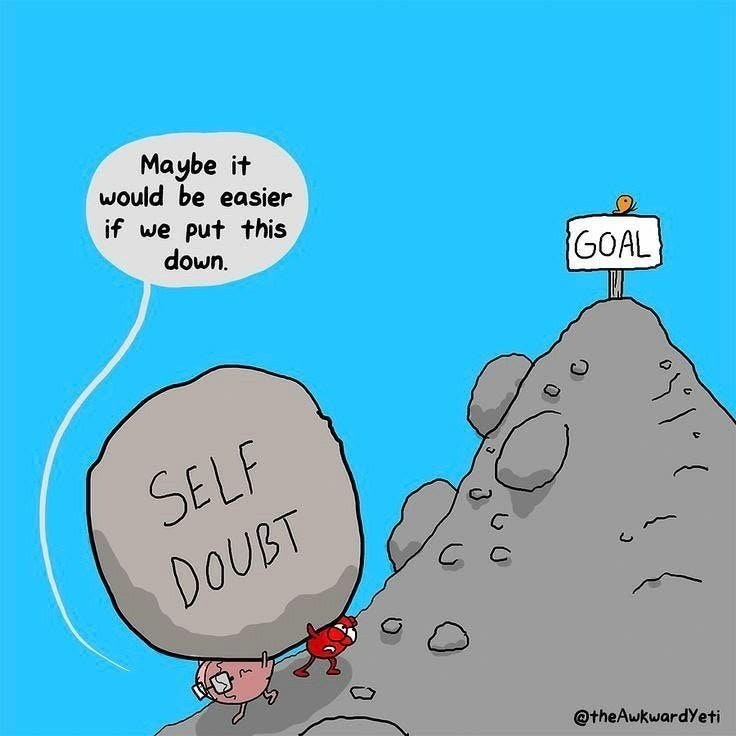 Regardless of how talented, fast, or experienced, there may be one common area where swimmers struggle – self-doubt. Whether during practice or behind the blocks, we sell ourselves short by thinking we are not capable of reaching our highest potential. Self-doubt can creep into your head when you least expect it. For example, being given an interval or goal time that seems unattainable and your mind is already thinking “There’s no way I can do that.”


