Wednesday, April 13, 2016

Why Failure Is Important

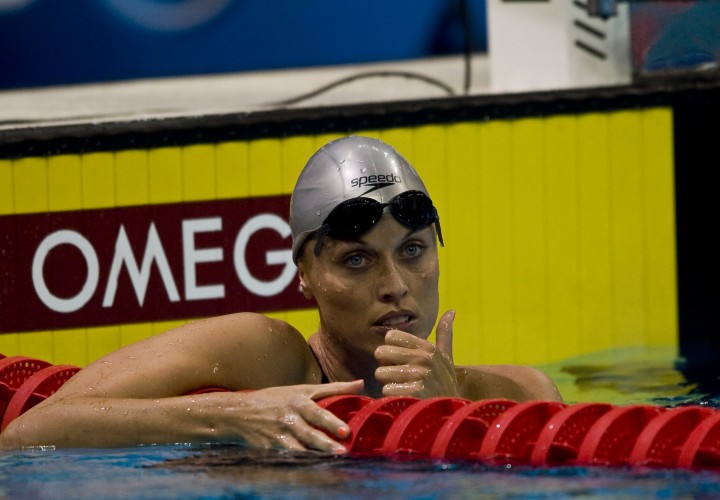
Photo Courtesy: Peter H. Bick

By Andy Ross, Swimming World College Intern (reposted from www.swimmingworldmagazine.com)

If you clicked on this article, you probably did so because you thought the title was absurd. ‘Why would failure be important? Failure is never something you want to prepare yourself for!’

Well, concerned reader, I want to tell you why failure is important.

Goals are a very important part of swimming. Without goals, we have nothing to shoot for, and there is no purpose. The best part about any given championship meet is seeing the look on a swimmer’s face when they achieve the goal they had set out for since the season began. The display of pure joy on the faces of swimmers is what coaches, parents and teammates strive to see. But, with every ecstatic swimmer, there is at least one, maybe two disappointed swimmers.

A lot of tears are shed on the pool deck at championship meets. Swimmers may miss their time goal, they may get 17th or they might have lost a team title that they spent the whole season dreaming of.
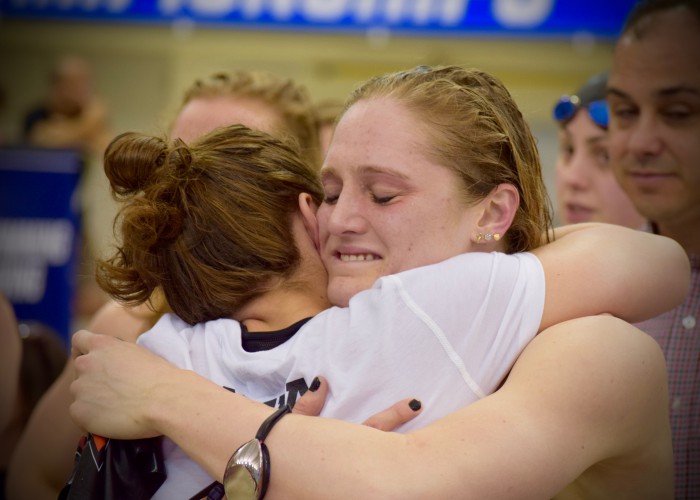
worrell-cry-emotional-hug-ncaas-2016

Photo Courtesy: Annie Grevers

When I was a junior in high school, my ultimate goals were to win an individual title at high school sectionals, get the school record in the 200 medley relay and to win the team sectional title for the first time in 11 years. I became so obsessed with those goals, that I spent almost every minute of every day thinking about what I was going to do when I got them. I would dream about the celebrations, the fist pumps and the time over and over in my head. I even had a countdown in my daily calendar that started about 100 days out.

When I got to that fateful February day, I was nervous. I was so nervous, I was freaking out. I was shaking. I had spent the entire season thinking about this one day and nothing else. I was ready to achieve my goals but I was nervous that they weren’t going to happen. And I didn’t know what I was going to do if I came up empty.
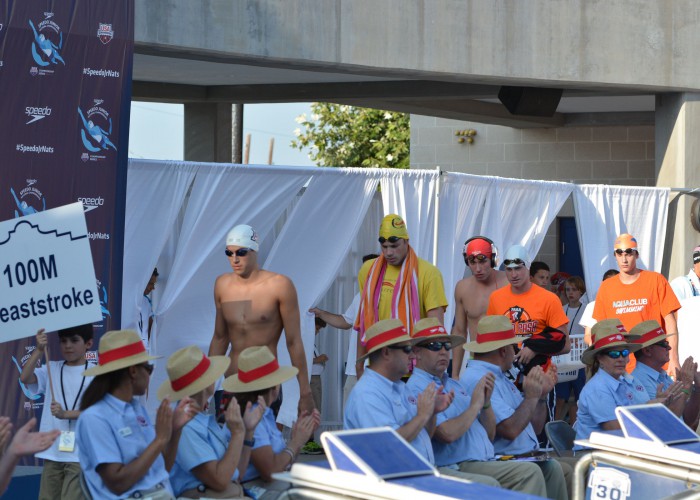
100-breaststroke-walkout-2015-usa-swimming-juniors-005

Photo Courtesy: Donna Nelson

The first event was the 200 medley relay. I swam the breaststroke leg and had the fastest split of my life. Yes, we won the relay, but we missed the school record by three tenths of a second. Oh well! I was glad we won, but I knew we had another chance to break it at state that next week.

The team battle was back and forth the whole meet. We were up, we were down. I knew I was going to have to be ready because I was in the last two events– the 100 breast and the 400 free relay. I was the only one from our team in the A-final of the 100 breast, while our rival school had two.

This was the race I dreamed about winning all year. I dove in and saw the guy next to me bolt out in front. I wouldn’t say I was shocked, because I knew he would be out fast. But I was shocked I couldn’t catch him. I remember the last 25 almost giving up. I swam my best time, but I didn’t win. In fact I was third! I couldn’t believe it. And to top it all off, we were down six points going into the last relay.

Our rival school had stacked the 400 free relay while my team stacked the 200s. I was anchoring the 400 and knew we needed about a two to three second lead if we were going to win. I dove in a second behind. I was devastated. Although I tried as hard as I could over those 100 yards, I was almost in disbelief it was happening.

‘This was supposed to be the year! This was the year where I would get that record, get my first individual title and help the team win a championship,’ I was thinking to myself. But it wasn’t. I sat and cried for a long time after that race was over.

Photo Courtesy: Hayley Good

Photo Courtesy: Hayley Good

But then I remembered I was going to have one more crack at that 200 medley relay record. It was my only swim of the meet and it was also my 17th birthday. We were in the very first heat of the very first event. We were going to get the record and just screw around the rest of the weekend. It was going to be the best weekend of my life.

Our backstroker got us out first. I dove in ahead, but I couldn’t get my arm speed up. I went into the turn with the longest glide I have ever done in my life. All my momentum was lost. I tried to spin but I knew it wasn’t working. I went six tenths slower than my split at sectionals. My teammates all swam faster, but we missed the record…again. This time it was by 11 hundredths.

I couldn’t believe it. I stormed off, knowing it was my fault we didn’t get the record.

After that meet, it took me a long time to fall in love with swimming again. I was so upset because I didn’t achieve my goals after I spent so much time thinking about how I would celebrate them. After that devastating season, I changed my approach to swimming. I stopped thinking about time, didn’t count down the days and stopped worrying about what other swimmers were doing around me. I worried too much about what our rival school was doing and what my competitors were doing in-season that I didn’t focus on myself, and what I needed to do. And if we were going to win a team title that year, I needed to get my job done, instead of worrying about what everyone else was doing.

Long story short, I had the best season to date during my senior year. I won my first individual title and went to state in two events. Yeah, we didn’t get the school record in the medley relay (we missed it by a second) and we didn’t win the team title. But I used the failure in the relay to fuel me for the individual races. And I realized that winning a team title doesn’t define a successful season. We were just as happy to finish second as we were if we would have won.
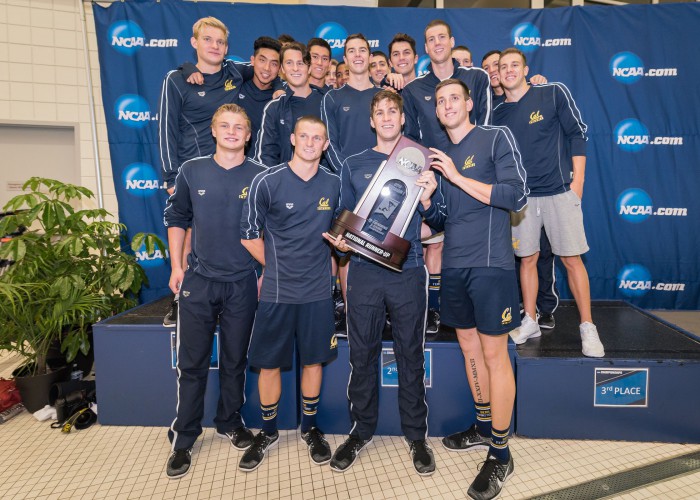
2016.03.26 NCAA Mens Swimming Championships_Reagan_California Team 1

Photo Courtesy: Reagan Lunn/Georgia Tech Athletics

A couple of years back, I remember watching Tom Shields do an interview after his senior season at Cal at NCAAs. Cal finished second to Michigan after Cal won the previous two. When asked why Cal stayed and applauded Michigan as they celebrated he said, “We win with class and we get second with class. We’re not mad that they won…Michigan gave us their best and these three days, they were better than we were. We have to applaud that, we came to race against the best. They were on fire, so why be mad?”

I’ve really taken this quote to heart, because I’ve always watched strong teams finish second at NCAAs and be happy. When I was younger, I was always wondering why they were happy. They probably had a team goal to win, and they didn’t achieve it. So why were they not all pissed off? Well, just because you miss a goal, doesn’t mean that season was a failure.

I had pretty much spent my entire junior season focused on that one day. I didn’t enjoy the process and didn’t spend any time thinking what would happen if I didn’t achieve any of my three goals. I was heartbroken when I didn’t achieve any of them.

Tom Shields wins the 200 butterfly.

Photo Courtesy: Peter H. Bick

So what I am saying is this: enjoy the process, don’t stress over your goals. Write down a goal time, and don’t put much thought into it after that (except when necessary, of course). Thinking too much can consume you and make you more stressed than you need to be. Don’t worry about your competitors because you can’t control what they are doing.

Another quote that Shields had in that interview was “experience is what you get when you don’t get what you want.” Don’t treat a ‘failure’ like it is the end of the world. Everything happens for a reason so don’t beat yourself up when something doesn’t go your way.

Shields Interview


AUTHOR: ANDY ROSS

avatar

Andy Ross is a junior at Southern Illinois University studying Radio and Television with a minor in Journalism.

Thursday, March 24, 2016

The Thing Holding You Back In The Pool

by Olivier Poirier-Leroy. The following is a sample email from his weekly motivational newsletter for swimmers. You can join for free by clicking here.

Hello my chlorinated homeslice,

Most swimmers are flying utterly blind when it comes to their performance.

Maybe you are one these swimmers, that shows up most of the time, works hard, and when expectations aren’t met at the big meet end up feeling shattered:

  • “See, I’m not a good swimmer.”
  • “I am obviously not talented enough.”
  • “I’ll never be successful.”

There are few things more frustrating than swimming poorly and not having a proper understanding of how we got there.

(What those few things are currently escape me…)

But what if there was a simple way to give us more clarity to how we perform in the water?

A way that we could better predict how we were going to perform?

While also keeping us motivated and focused during the long haul of a swim season?

The Feedback Loop

The hopelessness we experience when we don’t achieve what we want is one thing.

But not fully grasping why we came up short is another.

At least if we knew for sure why we didn’t perform to expectations than at least we could point at something and with a measured level of understanding and admit…

“Okay, well that’s the reason I didn’t swim as fast as I wanted to.”

Without this basic understanding of cause-and-effect what happens?

We experience that powerlessness and frustration that so often results in a swimmer telling themselves…

“I’ll never be the swimmer I want to be.”

Here is how to punch that salty thought straight in the mouth:

1. Start by measuring the things that matter.

Swimming, in it’s infinite complexity provides very clear opportunities to measure performance.

After all, our sport measures itself by the hundredth of the second.

But for most swimmers they wait until the big meet to take stock of their swimming and only measure their training by what the scoreboard says.

Which is fair…

But if you are only measuring your swimming when you hurl yourself at the touchpad you are missing out on a metric butt-ton of better swimming.

Of better workouts…

Of better goals…

And of course, better performances.

Lucky for us swimmers, our sport is pretty darn countable:

The clock doesn’t lie (unless you are perpetually leaving a couple seconds early…), your stroke counts don’t lie, attendance records are black and white, and the scoreboard at the big meet is a cold, hard teller of truth.

There is ample opportunity to measure stuff in our sport.

You just need to decide what it is that matters most to you, and to start measuring it.

From attendance, to results in practice, to effort levels (my favorite), to the amount of yards or meters you are doing at race pace in practice.

Choose one or two.

Next...

2. Compare & evaluate.

Now that you are measuring the thing or thingies that is most important to your swimming you are going to start developing heightened levels of awareness.

True self-awareness is one of those skills that very few of us have—the ability to objectively assess our training.

We naturally suffer from biases that explain away bad swims, that make bad stretches of workouts seem worse than they appear, or that convince us that it was “just one” practice that we missed…

The data and results from measuring your swimming is designed to limit the effect your biases have and give you a more realistic and accurate picture of how you are training.

And yes, I know… All this measuring talk sounds boring, doesn’t it?

Like homework?

But check this out…

Comparing performance from day-to-day and week-to-week quickly ends up turning into a game:

  • If you were measuring attendance, for example, most of us will lean towards trying to best our performance from the previous week.
  • ​​​​​​​Or if we give a great effort one day, we will naturally try to match or beat that effort the following day.
  • Or if you swim XYZ number of yards at race pace one week you will naturally want to beat that number the following week.

Measuring this stuff creates a positive feedback loop that reinforces itself and encourages better performances over and over again.

Take that one thing your swimming can improve most from, and turn it into something you can compare and evaluate on from week to week.

3. Fine-tune

Okie dokie, so if you have been following along so far we have come up with something(s) that is critical to our swimming.

And figured out a way to measure it so that we can compare it from week to week.

At this point we should be able to see quite plainly what is working, and what needs to change.

Often times seeing how you are actually performing on paper will be enough to spur you into action:

“Oh man, I am only swimming how many meters at race pace? I can totally do more than that.”

Or…

“I’m only sleeping 6 hours per night? Well, that’s gotta change.”

But for the rest, it’s time to get under the hood of your training and start tinkering.

This might mean you have to start getting to bed earlier so that you can make all those morning workouts you’ve been missing. Or actually doing the full extent of the main set properly.

Keep in mind that this isn’t a painless process; you’ll experience some bumps and bruises as you adjust your schedule, your training and your lifestyle in order to get more from your swimming.

But the process works if you are willing to open yourself to it.

So, in sum, this is your mission, if you choose to accept it:

  • Start measuring the things that matter most to your swimming.
  • Evaluate regularly.
  • Adjust and fine tune to get the most of your time and training.

If you are feeling a little lost, or don’t know where to start, I get it.

The easiest way to get started with this 3-step process is to start logging your workouts and those things that matter most to your swimming.


YourSwimBook is designed specifically to help you with putting together weekly goals and targets, and with the evaluation sheet at the end of each week you will be able to review and assess your training (the good and the not-so-good) on a regular basis.

Which means better, more consistent workouts.

More realistic expectations.

And ultimately…

Faster swimming.

Click here now to learn if YourSwimBook is right for you and your goals in the pool.

See you in the water,

Olivier

P.S. Logging your workouts not your cup of tea? 

How about big, glossy pictures of swimmers with motivational sayings on them?

We got those as well...

Check out our line of motivational swimming posters here.

Monday, March 21, 2016

How You Do Anything is How You Do Everything

by Olivier Poirier-Leroy. The following is a sample email from his weekly motivational newsletter for swimmers. You can join for free by clicking here.

It is inevitable. Like gravity. Or a trip to the bathroom after a night of all-you-can-eat undercooked chicken.

No matter how pumped you are when you write out those majestic goals at the beginning of the season, no matter how iron-willed you may be when September rolls around, eventually it will happen.

The drop off.

Yes, it will even happen to you my most motivated of broheims. It will happen to you, to me, to your teammate, and even those fancy-pant swimmers that grace the podium on the international stage.

The unavoidable lapse in motivation.

In reality, it’s entirely predictable. Our seasons as swimmers are ridiculously long. For some the days off between the end of championship season and September count in the teens. Compared to most other sports and their 3-6 month seasons, us swimmers represent year round. And as a result, it’s inescapable that we will experience those dips in motivation.

It’s okay. It’s alright. Beating yourself up over it, or thinking that you are a less committed athlete because of it is silly.

What matters is what you do next.

“How we do anything is how we do everything.”

Allow me to explain what that quote has to do with your motivation belly flopping off the 10m tower.

Think back to the last time you were feeling de-motivated. Nothing was going right. Everything and everyone was stressing you out, your stroke felt off, coach was getting on your nerves, and most importantly, the enormity of the goals you had laid out for the season loomed a massive and demoralizing shadow over you and your swimming.

With your swimming seemingly in the toilet, and those big goals staring at you dead-eyed from across the calendar, it was difficult not to feel even more discouraged. More bummed. More choked that you seemed to be now making backward progress.

And so you start taking a long view to your swimming. Because you feel off today you are not going to achieve your goals 7 months from now. Because you had a bad couple workouts this week the whole cycle is wasted. Because you had a bad workout today you worry that your swimming took some weird step backward.

To get back on track you need to forget tomorrow. Forget your goals. And forget yesterday too while you are at it.

To get back on track you need to do one thing, no matter how small, and to do it well.

The way we do anything is how we do everything.

Here’s a challenge: Go to the messiest room in the house. Clean one corner of the room. Just one corner. But clean the bejesus out of it. Once you are done, you’ll find something tugging at the back of your brain, that feeling of incompleteness, that the job isn’t done. Your brain will want you to clean the area beside the original corner. And then the area beside that one. And soon enough, the whole room is done.

You can apply this same, bizarro brain hack to your swimming.

When you are struggling to find motivation to swim to your utmost, pick one thing to do obscenely well.

Just one.

No more, and certainly no less.

Choose to have absolutely perfect streamlines off each wall. Decide that you are going to nail your catch on every stroke. Or that you going to tuck your knees in like a boss on each turn.

Soon enough the excellence devoted to that one menial task will spread to the rest of your swimming.

Sounds overly simple, right? Sometimes the things that work are deceptively simple. Complicated sounds good, but it is almost always the A-B answers that work best.

Try it out at your next practice, and let me know how it goes for you.


ABOUT YOURSWIMBOOK

YourSwimBook is a log book and goal setting guide designed specifically for competitive swimmers. It includes a ten month log book, comprehensive goal setting section, monthly evaluations to be filled out with your coach, and more. Learn 8 more reasons why this tool kicks butt.

Team and group discounts are available for clubs. Fill out a request for a complimentary estimate by clicking here.

Join the YourSwimBook weekly newsletter group and get motivational tips and more straight to your inbox. Sign up here.